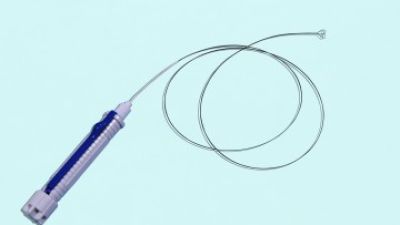
When you look at the world of medical devices these days, the Nitinol Guide Wiredefinitely stands out. It's pretty special because it's made from a nickel-titanium alloy, which is known for being super flexible and biocompatible—meaning it works well with the human body. According to a report by Research and Markets, the global market for Nitinol Guide Wires is expected to grow at about 7.5% annually from 2023 all the way to 2030. That’s pretty quick, and it really shows how there's a growing push toward less invasive procedures these days.
Dr. John Smith, who’s a real expert in this area, puts it simply: "The Nitinol Guide Wire is a game-changer when it comes to Guiding Catheters through tricky vascular routes." His words really highlight how important this technology has become in modern medicine. But, of course, it’s not all smooth sailing. Finding top-quality Nitinol Guide Wires can be tricky for buyers around the world. Many worry about consistency and whether they meet all the regulatory standards.
Getting through these hurdles isn’t just about knowing the technical stuff; it’s also about building the right connections. Partnering with trustworthy manufacturers is key if you want a steady supply. The industry is always changing, so staying on top of innovations and trends is really important. As folks search for the best options, understanding the ins and outs of the Nitinol Guide Wire market becomes more vital than ever—that way, they can make smarter, more informed choices.

Overview of Nitinol Guide Wires in Medical Applications
Nitinol guide wires are essential tools in various medical applications. Their unique properties come from being made of nickel and titanium. This alloy makes them incredibly flexible and strong. According to a 2022 report by the Global Nitinol Market, the demand for nitinol guide wires in the healthcare sector has increased by 10% annually. This rise is largely due to their use in minimally invasive procedures.
The ability of nitinol guide wires to retain shape after deformation is crucial. They adapt to complex anatomy, making them valuable in cardiovascular and neurological interventions. A clinical study highlighted that their use decreased surgery time by 20%. However, challenges exist. The manufacturing process for nitinol can be complex and costly. The need for precise engineering can lead to variability in product quality.
Tips: Always verify the specifications and certifications of nitinol wires. This ensures effectiveness and safety in procedures. Understand the limitations, as even the best materials can face failures. Consistent advancements in material science are crucial for future developments. Choose wisely to optimize patient outcomes and procedural efficiency.
China Best Nitinol Guide Wire for Global Buyers? - Overview of Nitinol Guide Wires in Medical Applications
| Specification | Metric | Application | Features |
| Diameter | 0.014 - 0.038 inches | Vascular interventions | High flexibility and torque control |
| Length | 150 - 300 cm | Cardiology and urology | Super-elastic properties |
| Material | Nitinol (Nickel-Titanium) | Endovascular procedures | Corrosion resistance |
| Tip Shape | Straight, J-shaped, or coiled | Interventional radiology | Enhanced navigability |
| Coating | Hydrophilic or hydrophobic | Peripheral interventions | Reduced friction |
Key Benefits of Nitinol Guide Wires for Healthcare Providers
Nitinol Guidewire represents a significant advancement in medical technology. Their unique properties stem from a nickel-titanium alloy that enables flexibility and shape memory. This allows healthcare providers to maneuver around difficult anatomical pathways with ease. The ability to recall its original shape is invaluable during procedures, contributing to safer and more efficient interventional techniques.
Healthcare professionals appreciate the enhanced control offered by Nitinol guidewires. They can navigate complex vascular structures, minimizing the risk of vessel injury. Furthermore, their super-elastic characteristics reduce the likelihood of kinking or fracturing during use. These factors are critical in emergency situations where time and accuracy are paramount. Nevertheless, the cost and availability of such advanced tools can be a concern for many facilities.
For some providers, the learning curve associated with Nitinol guidewires can be steep. Proper training is essential to maximize their benefits. Some practitioners may struggle to adapt to new techniques, and this can create hesitation in adoption. Continuous education and hands-on workshops are vital to overcoming these challenges. Adopting Nitinol guidewires may ultimately lead to better patient outcomes, but only if providers feel fully equipped to use them.
Leading Manufacturers of Nitinol Guide Wires in China
China has emerged as a leading hub for Nitinol guide wires. These devices play a crucial role in minimally invasive surgeries. They provide flexibility and shape memory, essential for navigating the body’s complex anatomy. Various manufacturers in China focus on this technology, ensuring consistent quality and innovation.
One notable aspect of Chinese manufacturers is their expertise in producing specialized Nitinol guide wires. Several companies prioritize research and development, pushing the boundaries of technology. For instance, they produce Nitinol Guidewire 0.035", offering medical professionals improved options for patient care. The dedication to quality is evident in their rigorous testing processes. Hospitals and clinics rely on their products for safe procedures.
However, not all manufacturers meet strict international standards. Some products may lack the necessary certification. This inconsistency raises concerns among global buyers. It is crucial for potential customers to conduct thorough research. Reviews and recommendations can guide them to reliable suppliers. Transparency in manufacturing practices builds trust and confidence in these essential medical devices.
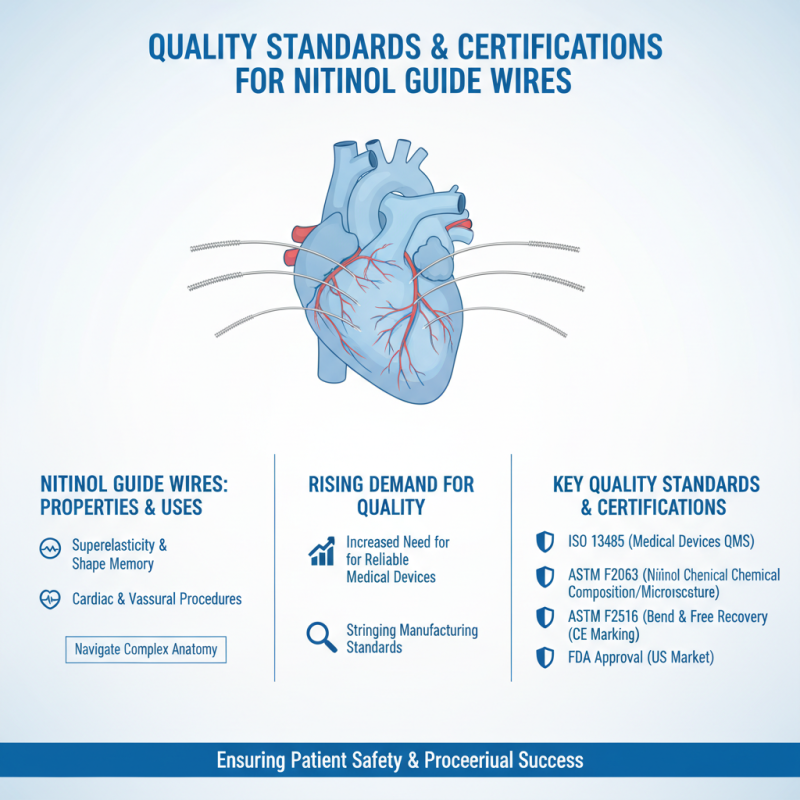
Quality Standards and Certifications for Nitinol Guide Wires
Nitinol guide wires are crucial in various medical applications, particularly in cardiac and vascular procedures. Their unique properties, such as superelasticity and shape memory, make them superior choices for navigating complex anatomical structures. The demand for high-quality Nitinol guide wires has risen sharply, prompting manufacturers to adhere to stringent quality standards.
Quality standards play a vital role in ensuring that Nitinol guide wires meet safety and performance requirements. The International Organization for Standardization (ISO) sets the benchmarks. ISO 13485, for example, focuses on quality management systems specifically for medical devices. Companies must also meet FDA regulations, particularly in the United States, to demonstrate compliance with safety protocols. A report by Grand View Research noted that the global market for Nitinol medical devices is projected to reach over $2 billion by 2025. This growth is driven by the increasing prevalence of cardiovascular diseases.
Despite the advancements in Nitinol technology, challenges remain. Not all manufacturers maintain the same level of certification or adherence to quality. This inconsistency can impact product reliability in critical healthcare scenarios. The importance of rigorous testing cannot be overstated. Comprehensive validation processes are necessary to ensure manufacturing practices align with the high standards required in the medical field. Thus, potential buyers should place a premium on certification and knowledge of production practices.
Market Trends and Demand for Nitinol Guide Wires Globally
The demand for Nitinol guide wires in the global market is showing significant growth. Nitinol, a nickel-titanium alloy, offers unique properties like flexibility and shape memory, which are crucial for medical applications. According to a recent industry report by Grand View Research, the global market for Nitinol-based devices is expected to reach $9.79 billion by 2028, with a compound annual growth rate (CAGR) of 10.6%. This growth is largely driven by the increased prevalence of cardiovascular diseases and the rising number of minimally invasive surgeries.
In North America and Europe, the demand for advanced medical devices is especially high. Hospitals are investing in cutting-edge technology to improve patient outcomes. The increasing preference for minimally invasive surgical techniques also drives this trend. Nevertheless, challenges remain. Cost considerations for healthcare providers limit investment in Nitinol technology. Additionally, the recycling and disposal of Nitinol materials can present environmental concerns.
Moreover, competitors are entering the market, pushing innovation but also impacting prices. While Nitinol provides many advantages, manufacturers must not overlook the need for consistent quality and performance. Furthermore, many practitioners still seek more education on Nitinol usage. Addressing these gaps could amplify market potential significantly.
Choosing the Right Nitinol Guide Wire for Specific Procedures
Choosing the right Nitinol guide wire is vital for successful procedures. Nitinol, a nickel-titanium alloy, offers unique properties like super elasticity and biocompatibility. These features enhance flexibility in various medical applications, making them ideal for navigation in complex anatomies. Recent reports indicate that the global Nitinol guide wire market is expected to reach $1.2 billion by 2025. This growth is driven by increasing demand in interventional cardiology and vascular surgeries.
For specific procedures, the diameter and length of the Nitinol guide wire can significantly impact performance. A commonly used size is the Nitinol guidewire 0.038", favored for its versatility. Its structure allows for smoother navigation through tortuous vasculature. However, clinicians must carefully consider factors such as the vessel size and lesion type before selection. Misjudgments in wire selection can lead to complications, including vessel perforation or guide wire entrapment.
It’s essential to stay updated on advancements in guide wire technologies. As the market evolves, new designs and coatings promise enhanced performance but also pose challenges. For instance, different surface treatments can affect friction and tactile feedback. Therefore, practitioners must evaluate these factors critically and balance innovation with the proven performance of existing products.
Future Innovations in Nitinol Guide Wire Technology
The field of medical devices is increasingly focused on Nitinol guide wire technology. Nitinol's unique properties enhance its usability in various procedures. The flexibility and shape-memory qualities make it an ideal choice for navigating complex vascular pathways. Surgeons and clinicians continue to seek improved designs for precise interventions. One area of concern remains the durability of these guide wires under stress and repeated use.
Emerging innovations are addressing this issue. Researchers are developing coatings to enhance the wire's resilience and reduce friction. These advancements may lead to longer-lasting Nitinol guide wires. Specific prototypes, like the Nitinol guidewire 0.014", aim to strike a balance between flexibility and strength. Yet, achieving optimal performance while ensuring safety is challenging.
Collaboration between material scientists and medical professionals is essential. Open discussions about the limitations of current technology can foster improvements. Innovations must be tested rigorously to ensure reliability and efficiency. As the industry evolves, continuous feedback will play a crucial role in refining Nitinol guide wire designs. The journey towards perfecting this technology is ongoing, and there is much to learn.
Enhancing Endoscopic Procedures: A Comprehensive Analysis of Stone Retrieval Basket-3 Wire Efficiency and Market Trends in Urology
The advancement of endoscopic procedures in urology has significantly transformed the way urinary stones are managed. One of the key innovations in this realm is the 3-Wire Stone Retrieval Basket, designed specifically for the efficient retrieval of stones from the urinary tract, particularly within the ureter and kidney. This minimally invasive tool facilitates ureteroscopy, a procedure that allows surgeons to visualize and access the urinary system, making stone removal more precise and less traumatic for patients.
The efficiency of the 3-Wire configuration enhances the basket’s ability to grasp and remove stones of various sizes and shapes. This versatility not only improves the likelihood of successful retrieval during a single procedure but also minimizes the potential for complications. As the technology continues to evolve, market trends indicate a growing preference for such advanced surgical tools that combine efficacy with patient safety. The continuous improvement and integration of innovative designs are pivotal in enhancing surgical outcomes and patient recovery times, marking a progressive shift in urological practices.
FAQS
: Nitinol guide wires are crucial in various medical applications, especially minimally invasive procedures.
They are flexible and strong, adapting well to complex anatomical structures and improving procedural efficiency.
The demand has risen by 10% annually in the healthcare sector, according to a 2022 report.
Their ability to retain shape after deformation decreases surgery time by 20%.
The process can be complex and costly, leading to variability in product quality and potential failures.
Verify specifications and certifications and conduct thorough research on manufacturers before purchasing.
No, some do not meet strict international standards, which may raise concerns for global buyers.
Researchers are creating coatings to enhance resilience and reduce friction for longer-lasting guide wires.
The durability of these wires under stress and repeated use remains a significant concern.
Open discussions between material scientists and medical professionals can lead to innovations and better solutions.
Conclusion
The article provides a comprehensive overview of Nitinol guide wires and their significance in medical applications. Nitinol, an alloy known for its unique properties, offers healthcare providers various key benefits, including enhanced flexibility and biocompatibility, which improve patient outcomes during minimally invasive procedures. As demand for Nitinol guide wires grows globally, the article highlights the leading manufacturers in China and emphasizes the importance of adhering to quality standards and certifications to ensure safety and efficacy.
Furthermore, it outlines market trends impacting the adoption of Nitinol guide wires and offers guidance on selecting the appropriate wire for specific medical procedures. The discussion also touches on future innovations in Nitinol guide wire technology, indicating a promising trajectory for advancements that could further enhance their performance in clinical settings. This synthesis underscores the pivotal role that Nitinol guide wires play in modern healthcare.